
How Prefabricated Buildings Are Shipped: A Complete Guide to Modular Building Transport
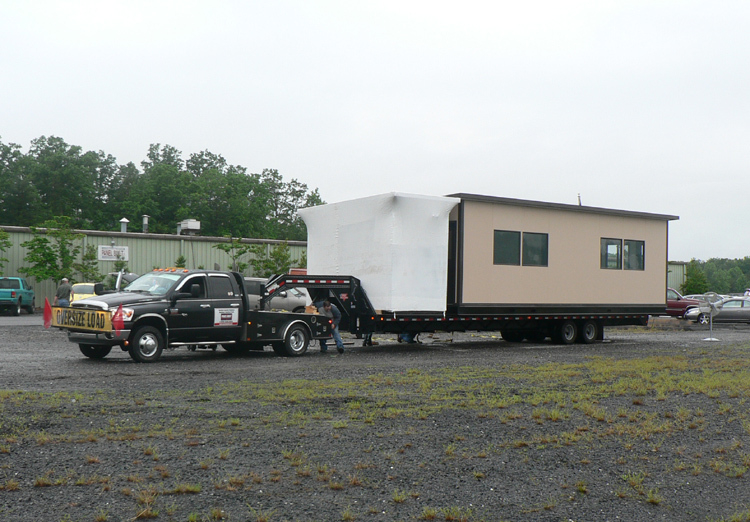
One of the biggest advantages of a prefabricated structure is that nearly the entire building is manufactured off-site and arrives at the job site ready for installation. But before it reaches its final location, an important intermediate step must happen smoothly: transporting modular buildings from the factory to the field.
Panel Built ships modular structures across the United States and internationally, navigating long distances, varying weather conditions, tight job sites, and different roadway environments. This guide explains what happens during prefabricated buildings delivery setup, how buildings are packaged and secured, and what goes into the safe transportation and assembly of modular buildings.
Why Transportation Matters for Prefabricated Structures
Because prefab buildings are constructed off-site, transportation becomes a critical part of the overall project. A well-planned shipping process ensures:
- The structure arrives damage-free
- All installation materials are included
- Delivery timing aligns with site readiness
- The building can be off-loaded safely and efficiently
Panel Built follows strict quality control standards for packaging, loading, securing, transporting, and off-loading every unit.
Step 1: Final Inspection Before Shipment
Before any prefabricated structure leaves the factory, it undergoes a complete inspection.
Comprehensive Quality Check
A trained supervisor examines:
- Structural integrity
- Exterior and interior finishes
- Electrical components
- Windows, doors, and openings
- Fit and finish of all prefabricated panels
If anything falls outside of Panel Built’s standards, corrections are made before the building can be cleared for shipment.
Gathering Installation Materials
All additional components required for installation—fasteners, anchors, modular wall panels, trim, etc.—are:
- Collected
- Labeled
- Verified
- Secured inside the structure
This ensures everything arrives on-site together for a smooth installation.
Customer Coordination
Before loading begins, the shipping supervisor contacts the customer to reconfirm:
- Delivery schedule
- Site access requirements
- Receiving team availability
- Equipment needed for off-loading
This step ensures the job site is fully prepared when the building arrives.
Step 2: Packaging the Prefabricated Building
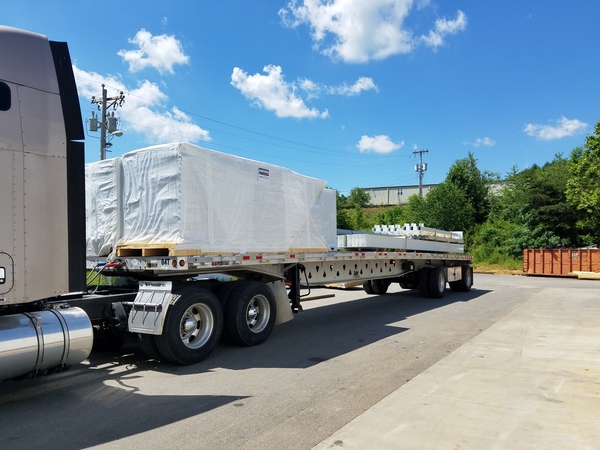
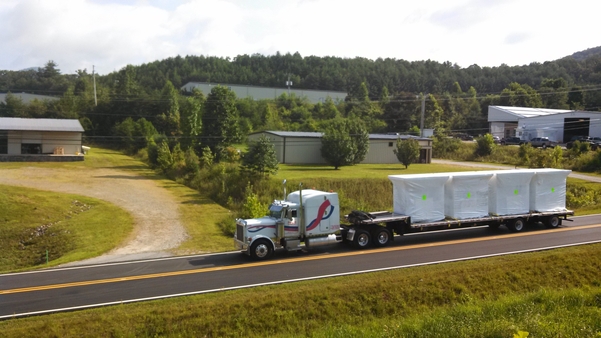
Proper packaging is essential for protecting the structure during modular building transport.
Protective Wrap and Padding
To safeguard the building against weather, debris, and physical impact:
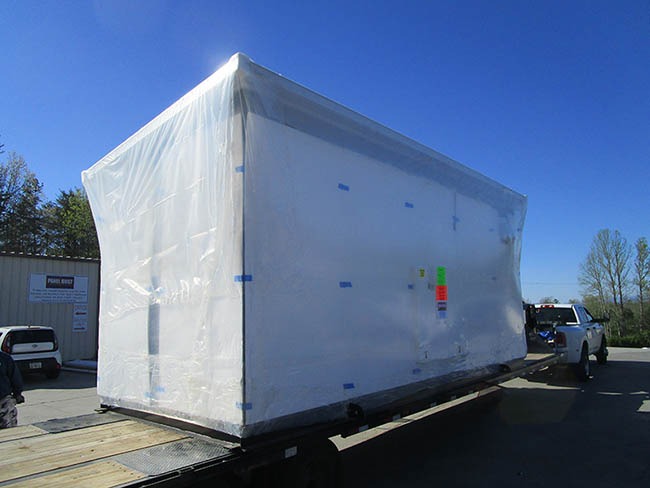
- The building is wrapped in a heavy-duty plastic covering
- Foam padding is placed around corners, edges, and window areas
- Additional protection is added for buildings traveling long distances or through rough terrain
This protective wrap offers:
- Moisture resistance
- Dirt and dust protection
- Tamper resistance
- Impact cushioning
Documentation and Photo Log
Panel Built photographs the building at multiple stages of the packaging process. This verifies quality control and ensures every protective measure is documented.
Step 3: Loading the Building for Transport
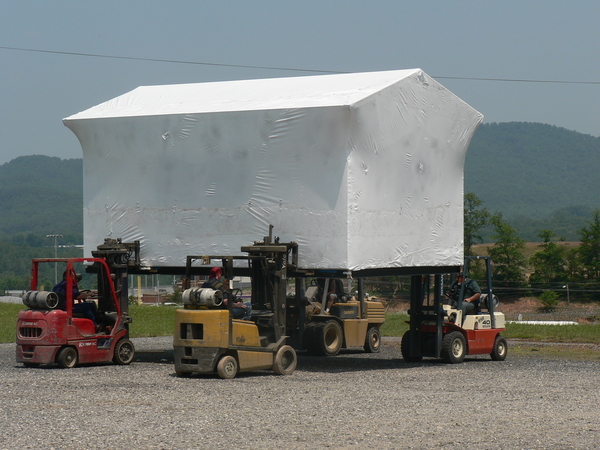
The next step in transporting modular buildings is carefully lifting and positioning the structure onto the truck bed.
Forklift or Multi-Forklift Lifts
Most Panel Built modules can be loaded using:
- One trained forklift operator
- One spotter for guidance
For larger or heavier buildings (over 4,000 lbs or oversized footprints), multiple forklifts—or a high-capacity forklift—may be required.
Forkliftable Steel Base
Panel Built structures are designed with a forkliftable base, allowing:
- Stable lifting
- Controlled placement
- Safer load handling
This feature significantly streamlines the loading and unloading process.
Step 4: Securing the Modular Building for Travel
Once the building is on the truck, securing the load correctly is essential for safe transport.
4-Point Tie-Down Method
The shipping team uses either straps or chains:
- Two points pull forward
- Two points pull backward
The opposing forces lock the building firmly in place.
Straps vs. Chains
- Straps are ideal for buildings with delicate finishes
- Chains may be used for heavier units or steel-based modules
Each connection passes through the forklift slots or designated tie-down points on the base.
Final Visual Verification
The shipping team photographs the secured load to confirm:
- Tie-down compliance
- Proper alignment
- Structural protection
This documentation ensures full accountability throughout the shipping process.
Step 5: Off-Loading at the Job Site
Arriving at the destination, the process mirrors loading—priority: safety and precision.
Forklift Off-Loading
Most prefabricated buildings can be placed using:
- One forklift
- One trained operator
- One spotter
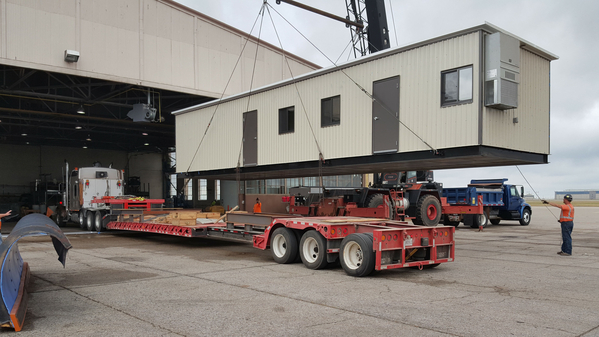
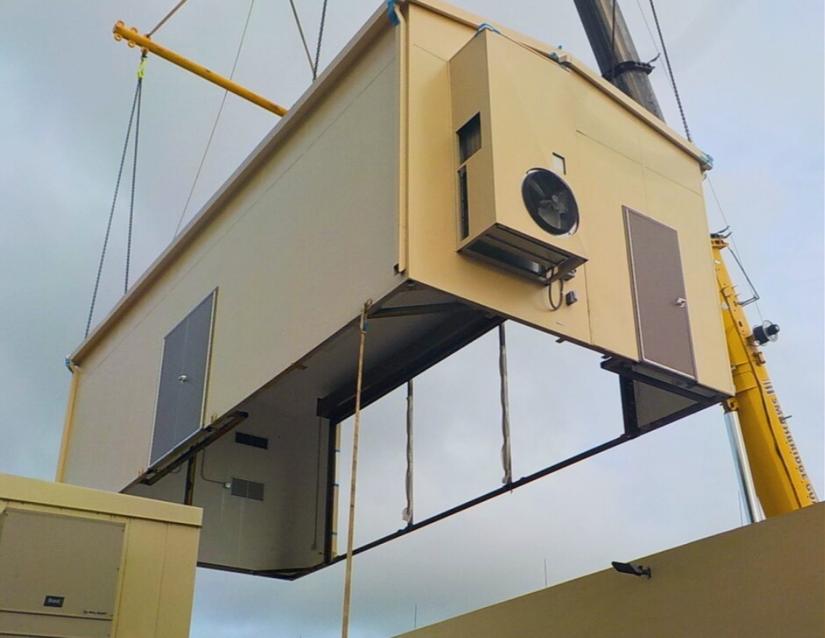
Crane Lifting for Large Units
Oversized modular buildings may include:
- Roof-mounted lifting rings
- Crane compatibility for safe placement
- Guided descent for exact positioning
This allows seamless prefabricated buildings delivery setup, even in tight or complex job sites.
How Modular Buildings Are Assembled After Delivery
After off-loading:
- Anchoring to the foundation or slab
- Connecting electrical systems
- Adding modular wall sections (if panelized)
- Installing remaining components packed inside the structure
Because much of the work is completed off-site, the transportation and assembly of modular buildings is far faster and simpler than traditional construction.
Safe, Efficient Modular Building Transport
Successful delivery and installation begin long before a modular building reaches its destination. With rigorous inspections, protective packaging, secure loading, and planned off-loading procedures, Panel Built ensures every prefabricated structure arrives safely and ready for final assembly. Transporting modular buildings requires expertise, and Panel Built’s proven process guarantees dependable, damage-free results.
Plan Your Prefabricated Buildings Delivery With Panel Built
Planning to install a prefabricated modular building? Panel Built provides end-to-end support, from engineering and fabrication to modular building transport, delivery, and setup. Request a quote today to learn how we can ensure safe, efficient transportation and assembly for your project. Contact us today!