
Understanding Cleanroom Manufacturing and Clean Room Levels for Your Facility
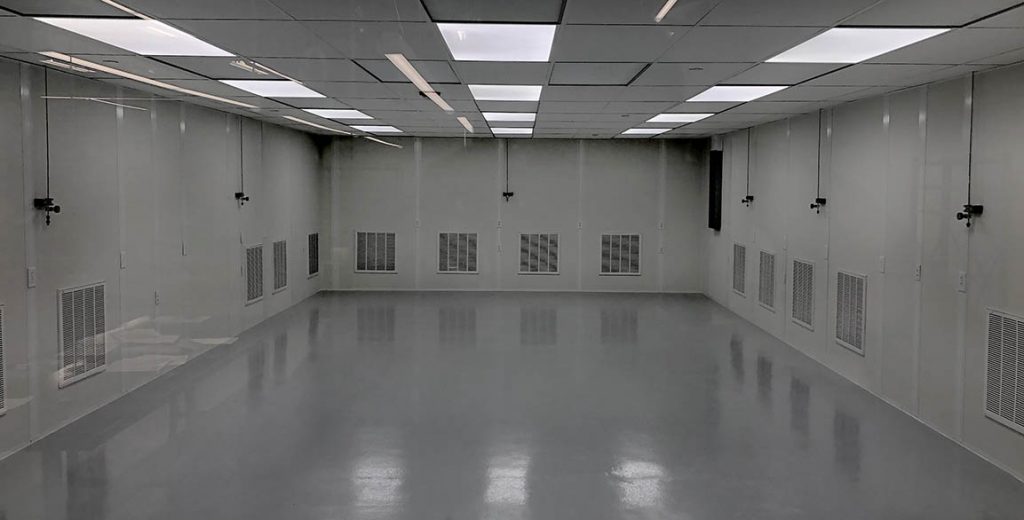
Cleanrooms play a critical role in industries where precision, sterility, and contamination control determine product quality and operational success. While Panel Built is widely known for modular offices, steel buildings, and mezzanines, we also engineer modular cleanrooms that help organizations achieve the exact clean room levels required for their manufacturing, testing, or laboratory environments.
If your operations involve sensitive manufacturing steps or regulatory oversight, choosing the right cleanroom classification—whether Class 1,000 clean rooms, Class 10,000 clean rooms, or another ISO level—is essential. This guide walks through cleanroom basics, clean room levels, airflow and pressurization requirements, and the differences between common classifications like the 10k clean room standard.
What Is a Cleanroom and Why Cleanroom Manufacturing Matters
Cleanrooms are controlled environments designed to minimize airborne particulates—including dust, microbes, aerosols, and chemical vapors—to protect products, processes, or personnel. Unlike standard factory floors, cleanrooms maintain strict control over:
- Airborne particle counts
- Air changes per hour (ACH)
- Temperature and humidity
- Airflow patterns
- Filtration (HEPA or ULPA)
- Pressurization
- Materials and surfaces
Industries That Rely on Cleanroom Manufacturing
Many modern industries require modular cleanrooms to meet regulatory, quality, or safety standards, including:
- Electronics manufacturing and microelectronics
- Aerospace and defense
- Medical device and pharmaceutical production
- Food and beverage processing
- Semiconductor testing
- Plastics and resin molding
- Laboratory and R&D environments
In many cases, cleanroom requirements are dictated by federal or industry-specific standards. Understanding the correct clean room level before building is essential to passing inspections and avoiding costly rework.

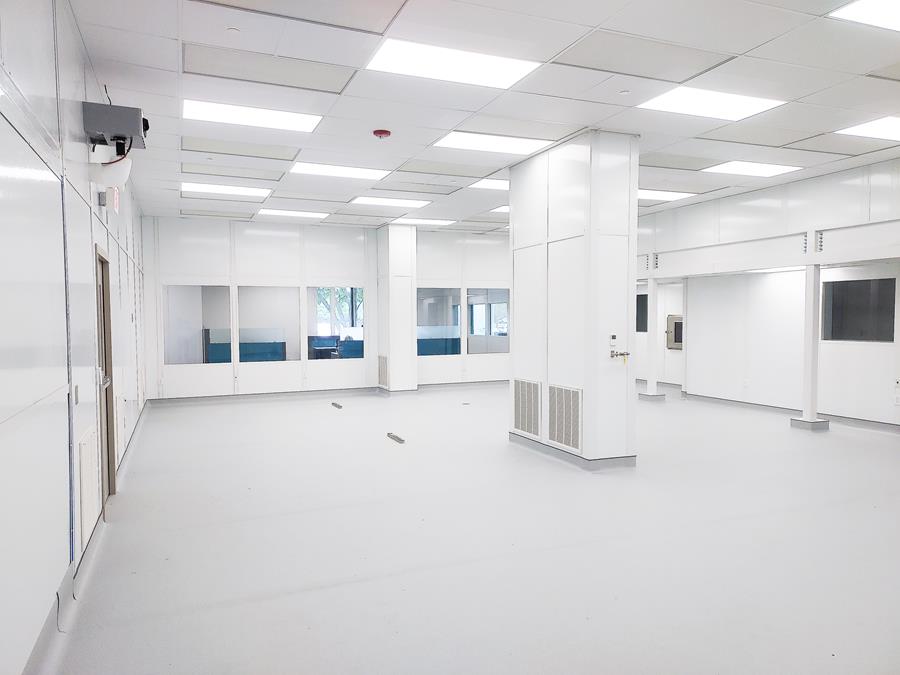
Understanding Clean Room Levels: ISO Standards and Classifications
Cleanrooms are classified using ISO 14644-1 standards, which specify the number of allowable particles per cubic meter. Lower ISO numbers represent cleaner environments.
ISO Cleanroom Scale Overview
- ISO Class 1: Cleanest, ultra-controlled (rare, highly specialized)
- ISO Class 9: Least stringent
- ISO Class 6–8: Most common for commercial and industrial manufacturing
- ISO Class 7: roughly aligns with Class 10,000 clean rooms
- ISO Class 6: roughly aligns with Class 1,000 clean rooms
Class 1,000 vs. Class 10,000 Clean Rooms
Two of the most common cleanroom manufacturing environments are Class 1,000 and Class 10,000.
Class 1,000 Clean Rooms (ISO 6)
These environments allow up to 1,000 particles ≥0.5 microns per cubic foot. They are ideal for:
- Precision electronics
- Fiber optics
- Medical devices
- Semiconductor assembly
- Aerospace components
Class 10,000 Clean Rooms (ISO 7)
These environments allow up to 10,000 particles ≥0.5 microns per cubic foot and are suitable for:
- General electronics assembly
- Plastics molding
- Packaging areas
- Pharmaceutical prep zones
- Many testing and inspection tasks
Panel Built modular systems can be engineered to meet Class 10000 clean room requirements, ensuring compliance with airflow, filtration, lighting, and material standards for the 10k clean room standard.
Airflow, Filtration, and Cleanroom Requirements
Cleanroom performance depends heavily on proper airflow design and HEPA filtration. Even small deviations can impact contamination levels, yield rates, or regulatory status.
Positive Pressure Clean Rooms
Most modular cleanrooms use positive pressure to prevent contaminants from entering the controlled area.
How they work:
- Filtered air enters from the ceiling through HEPA filters.
- The room is kept at a higher pressure than adjacent spaces.
- Air pushes particles downward and outward through low wall vents.
- Airlocks or entry vestibules add an additional layer of protection.
Positive pressure rooms are ideal for protecting products and processes from external contamination.
Negative Pressure Clean Rooms
Negative pressure cleanrooms are designed to contain contaminants rather than exclude them.
Used for:
- Chemical handling
- Pathogen containment
- Hazardous materials testing
- Certain pharmaceutical processes
In these rooms, air is drawn inward through HEPA filtration, preventing contaminants from escaping into surrounding areas.
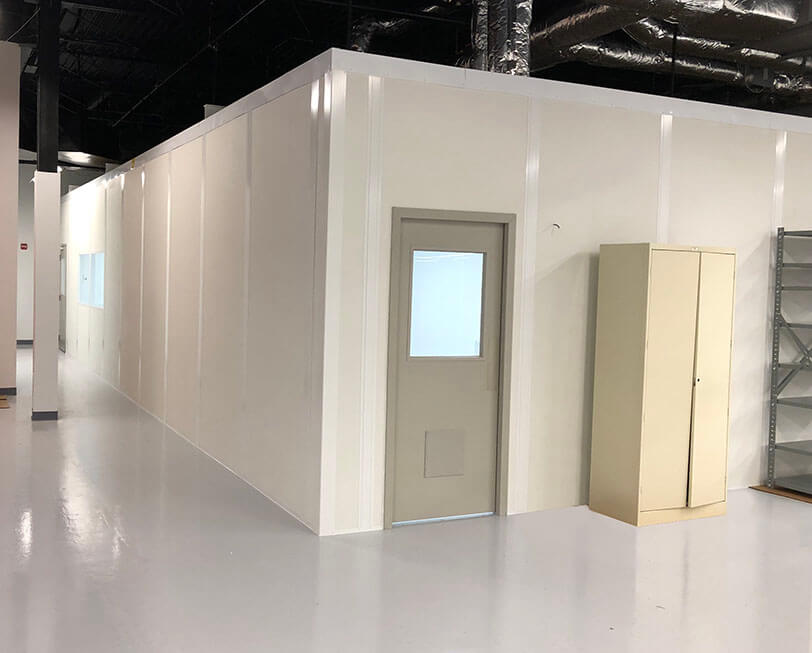
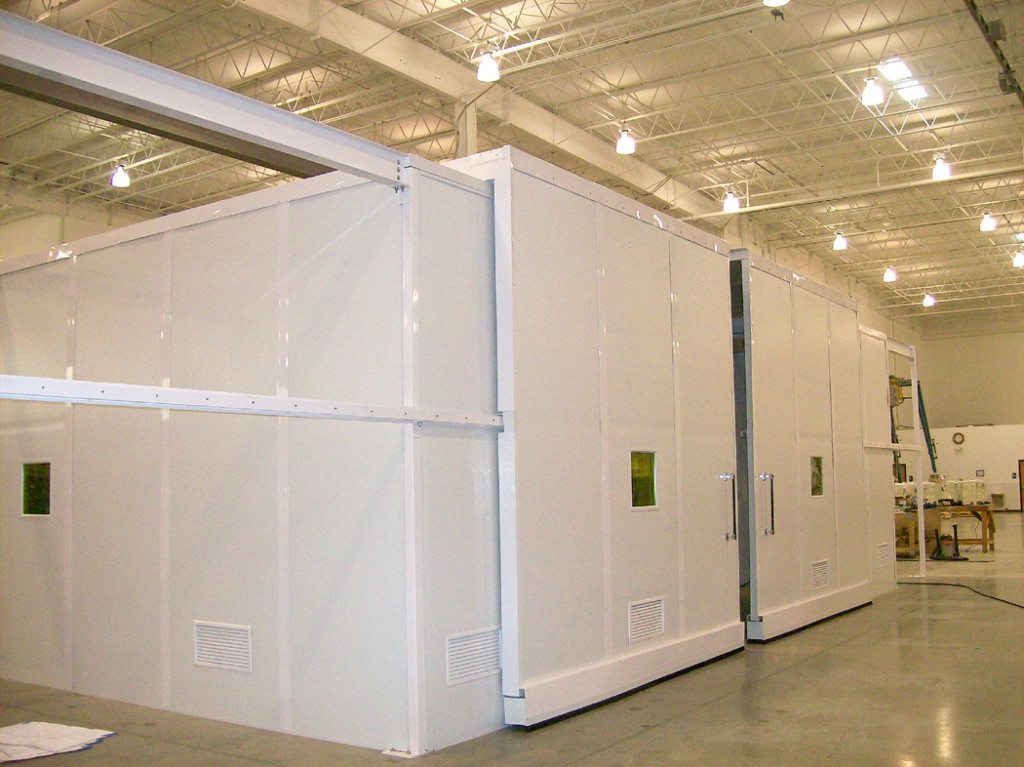
Choosing the Right Modular Cleanroom for Your Facility
When selecting a cleanroom, consider the following factors:
Regulatory Requirements
Your industry may require specific ISO levels, especially in:
- Medical device production
- Aerospace and defense work
- Food handling
- Electronics manufacturing
Clean Room Levels and Functionality
Identify which tasks require controlled environments and match them to the correct cleanroom class.
Space and Layout
Panel Built modular cleanrooms can be built:
- At ground level
- On mezzanine platforms
- Inside existing facilities
- As standalone exterior structures
Customization Options
Panel Built offers:
- Custom cleanroom wall systems
- HVAC integration
- Airlocks and gowning rooms
- Hardwall or softwall options
- Modular wiring and lighting
- Expandable designs
Future Flexibility
Unlike traditional construction, modular cleanrooms can be relocated, expanded, or reconfigured as your operation evolves.
Cleanroom Manufacturing Done Right
Cleanroom manufacturing is essential for industries where precision, sterility, and contamination control impact product quality or regulatory compliance. Understanding clean room levels—especially the differences between Class 1,000 clean rooms and Class 10,000 clean rooms—ensures you select the right environment for your processes. With modular design flexibility, Panel Built cleanrooms help you meet ISO standards, maintain consistent air quality, and adapt to future production needs.
Request a Quote for Your Cleanroom Project
Ready to design a cleanroom that meets the exact standards your operation requires? Panel Built’s cleanroom specialists can help you determine the correct clean room level, engineering requirements, and modular configuration for your facility. Contact us today to request a quote or speak with an expert about your Class 1,000 or Class 10,000 cleanroom project.
