How Modular Design Supports the 2026 Reshoring Surge
If you manage a busy distribution center or oversee a manufacturing facility, you have probably noticed that “reshoring” is no longer just industry chatter. It has become a strategic shift that’s actively reshaping the American industrial landscape. If you’re feeling pressure to bring production back to U.S. soil while also sorting through new tariffs, tax incentives, and infrastructure constraints, then you’re far from alone.
At Panel Built, our mission is to solve our customers’ space needs with excellence and great customer service. We know that relocating and a facility can feel overwhelming, especially when timelines are tight and stakes are high. This guide breaks down what’s happening in the reshoring movement today and explains how modular design can help you grow in a way that is forward looking and cost conscious.
Is Reshoring Actually Happening?
For a long time, many companies took a cautious, wait-and-see approach to global trade uncertainty. This appears to be changing.
According to a Reshoring Initiative report, manufacturers and foreign investors announced 244,000 reshoring and foreign direct investment jobs in 2024 alone. That made it the second-highest year since the Reshoring Initiative began tracking these announcements in 2010. In total, more than 2.5 million jobs have been reshored or created through foreign direct investment over the past 15 years, leading experts to regard domestic production in the U.S. as a lasting priority, not simply a Band-Aid.
What’s Driving the Shift?
A big part of the reshoring push comes down to reliability and risk. Companies want supply chains that are easier to manage and less exposed to global disruption.
In response, industry experts predict that the U.S. industrial economy could “hit decade high growth levels in the back half of 2026 and into 2027.” They describe two ways this growth is likely to happen:
- Short term: Much of the growth starts with making better use of current assets. In the near term, the fastest and most cost-effective way to bring production online in the U.S. is by improving productivity and efficiency within existing facilities.
- Long term: Over time, those efficiency investments are expected to support more deliberate expansion, including an increase in greenfield projects.
Together, these near-term and long-term investments point toward what these analysts have called “a foundation for a new era in U.S. manufacturing.”
Growing Vertically, Growing Modularly
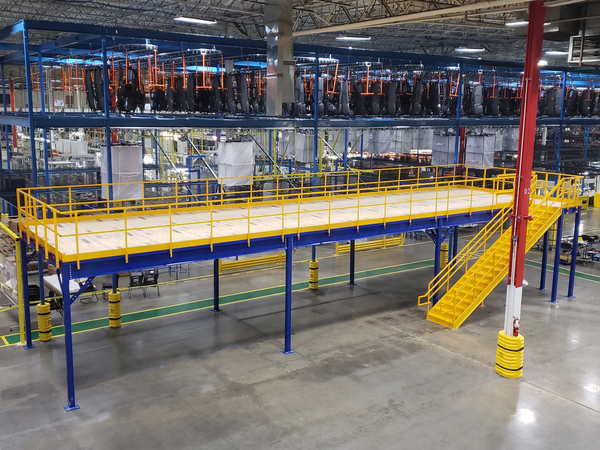
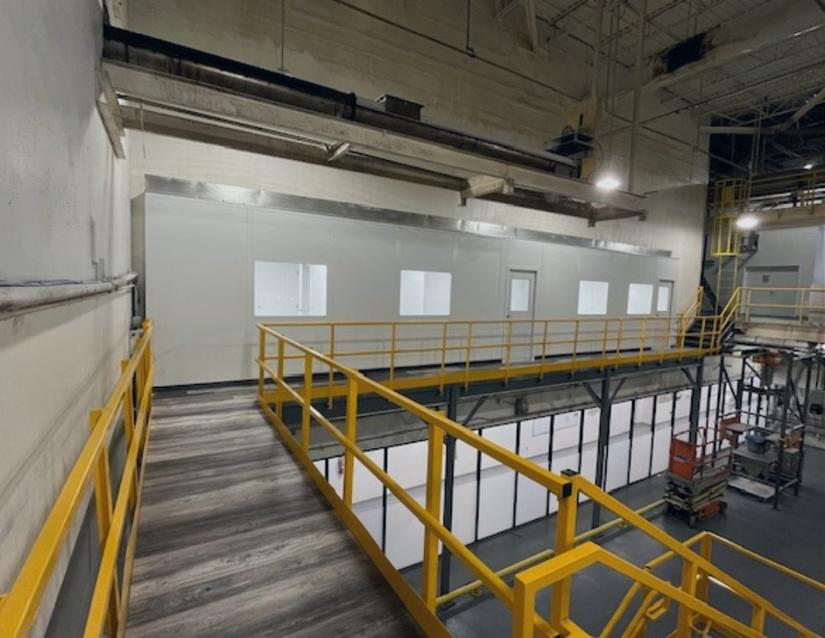
When expanding outward is costly or impractical—especially as real estate tightens and power access becomes more limited—many facilities look for ways to grow within their existing footprint. Modular industrial mezzanines and steel work platforms are one option, allowing facilities to add usable square footage without changing a building’s footprint. That same modular, inside-the-footprint approach can also be applied to other critical infrastructure and support spaces throughout the facility.
Building up and building modular offers clear, real-world advantages:
- Avoid grid delays: Staying within an existing facility often allows companies to rely on their current power allocation rather than waiting years for a new utility interconnection.
- Reduce real estate pressure: Facilities can sidestep the cost and uncertainty of acquiring new land or signing premium leases in markets with limited availability.
- Move on your timeline: Modular systems can be manufactured and installed in as little as two to four weeks, which matters when speed directly impacts competitiveness.
This approach extends beyond mezzanines to a range of modular expansion options, both within existing buildings and in new facilities.
- BESS enclosures: Add on-site energy storage to support load growth, resilience, or renewable integration without waiting on major grid upgrades.
- E-houses: Deploy prefabricated electrical rooms for power distribution, controls, and switchgear while site preparation and equipment procurement happen in parallel.
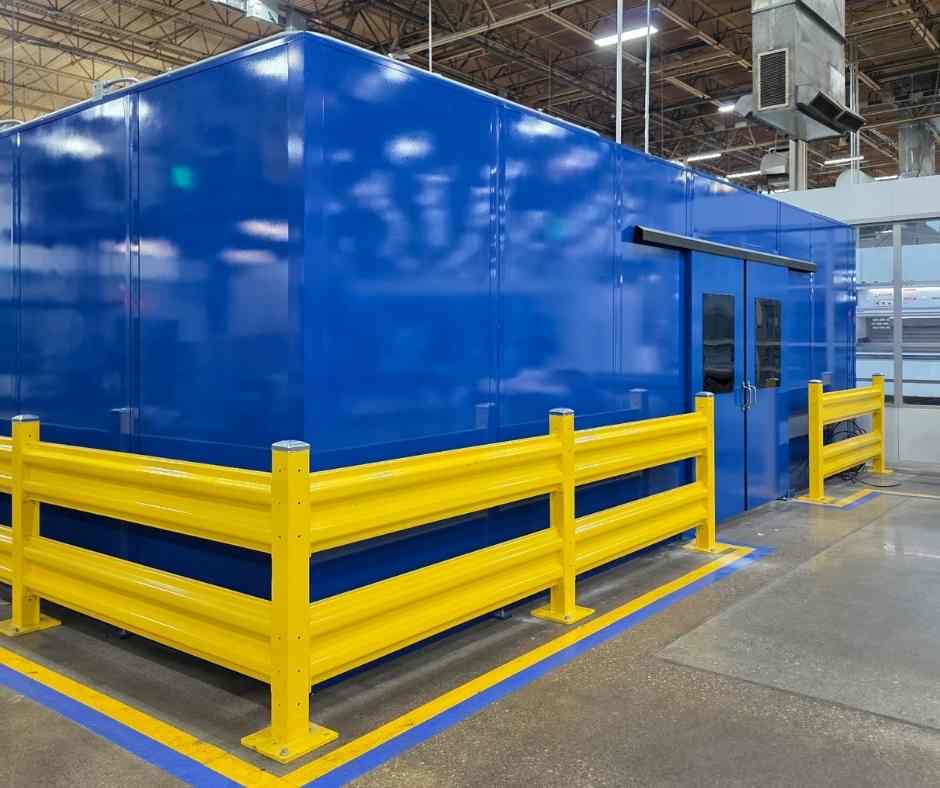
- Cleanrooms: Introduce controlled environments for manufacturing or assembly inside existing buildings, avoiding the cost and delay of ground-up construction.
- Office space: Create offices, control rooms, or support spaces close to operations without expanding the building footprint or disrupting production.
Financial Boost: The OBBBA Tax Advantage
Because many modular structures, such as in-plant offices and mezzanines, are considered Tangible Personal Property rather than permanent real estate, they can often be depreciated more quickly than traditional buildings. Under the OBBBA, this translates into faster tax write-offs through restored bonus depreciation and expanded Section 179 expensing, improving cash flow and shortening the payback period for facility expansions.
Together, these incentives are encouraging companies to think differently about not just how they build, but how quickly they can recover their investment.
The “Made in USA” Edge
As a Georgia-based manufacturer, Panel Built helps customers align modular expansion strategies with federal domestic content requirements, including Buy America considerations. Projects tied to federal funding must comply with the Build America, Buy America Act, meaning that beginning in late 2026, federally funded projects will require at least 55% of a product’s components to be manufactured in the United States. Because our systems are engineered and built domestically, working with Panel Built can help reduce compliance risk and avoid the added time and complexity associated with waiver requests.
A Steady, Strategic Path Forward
Industry analysts describe the years ahead as a period of measured optimism for U.S. manufacturing. Growth may not be explosive across every sector, but it is expected to be steady and intentional, shaped by long-term investment rather than short-term reaction.
Reshoring is rarely a single, one-time move: it's an ongoing series of decisions that influence space planning, timelines, capital investment, and long-term flexibility. Modular design gives facilities a way to respond to those pressures without locking themselves into permanent, hard-to-change infrastructure before operations, power needs, or production requirements are fully defined.
Whether the next step involves adding controlled environments, expanding electrical capacity, or creating space for people and processes, Panel Built works with customers to plan expansions that align with their operational needs today and remain adaptable as conditions evolve. If you're ready to explore how modular design can support your facility’s next phase of growth, we would be glad to talk through your goals and help you plan what comes next.